Alternative Scholarship

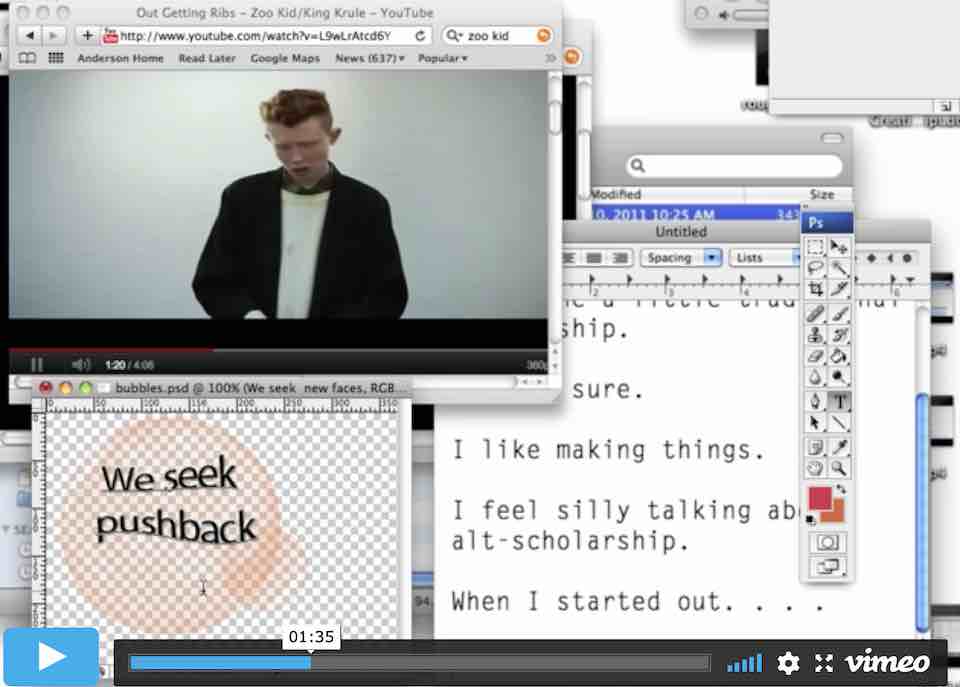
It's impossible to define a field or movement with a limited set of practices or list of concerns. At the same time, there are aspects that make clear the meanings, motivations, and methods of alternative scholarship.

What is it?

  1. Affirmative

    It is all about the yes-and. Too much scholarship is based on arguing against the ideas of others. What if there are other possibilities that we overlook?

  2. Speculative

    When we know in advance our questions and conclusions, we reinscribe rather than reinvent knowledge. Can scholarship itself become emergent and open-ended?

  3. Embodied

    We lose something when we cordon scholarship off to intellectual realms only. Emotion, performative modes, and physical response can open channels for scholarship.

  4. Material

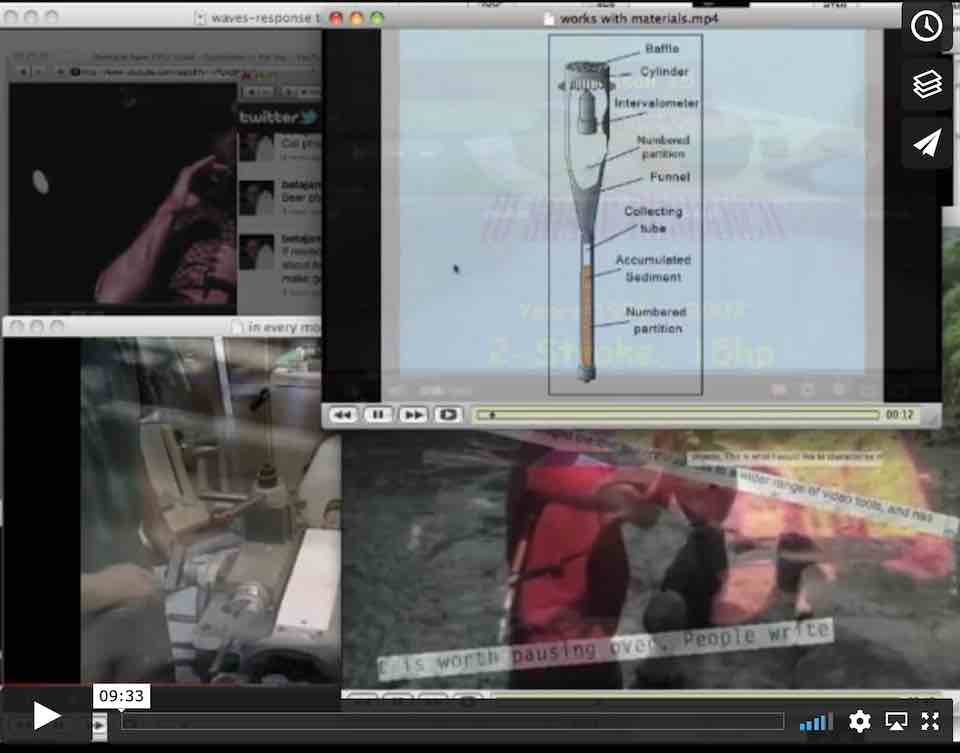
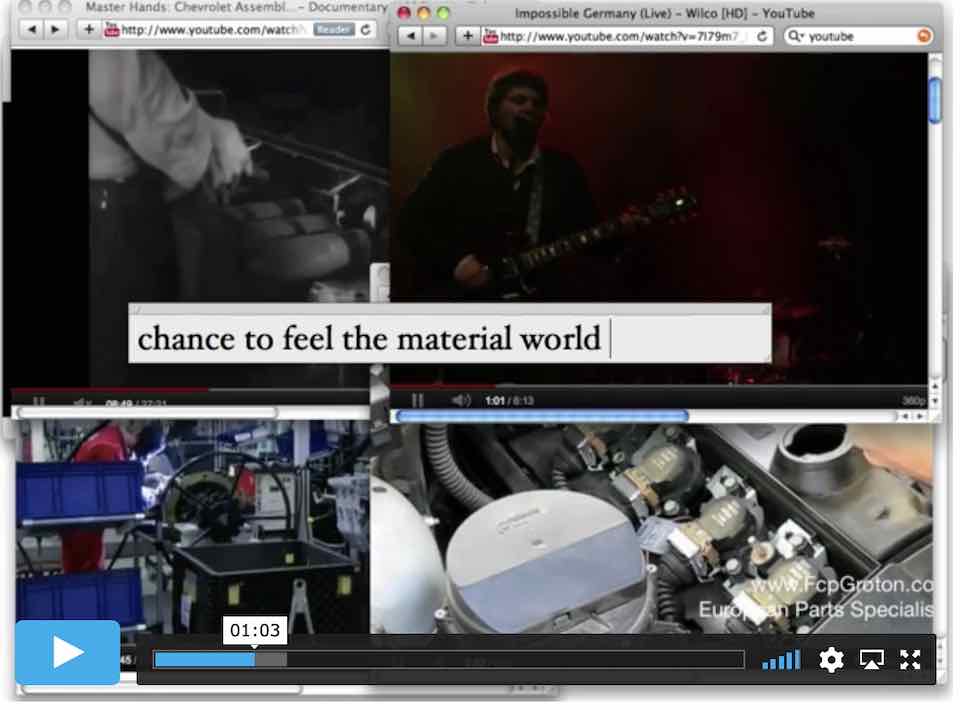
    Engaging with the material world has long been a part of scholarship. What happens when we foreground the material aspects of composing as we theorize?

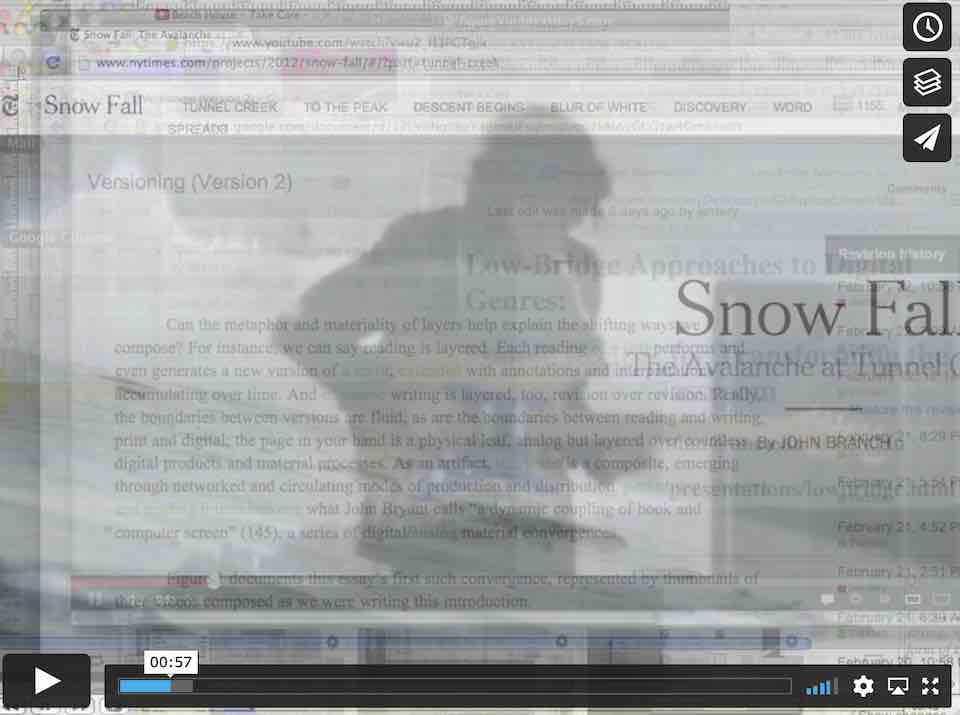
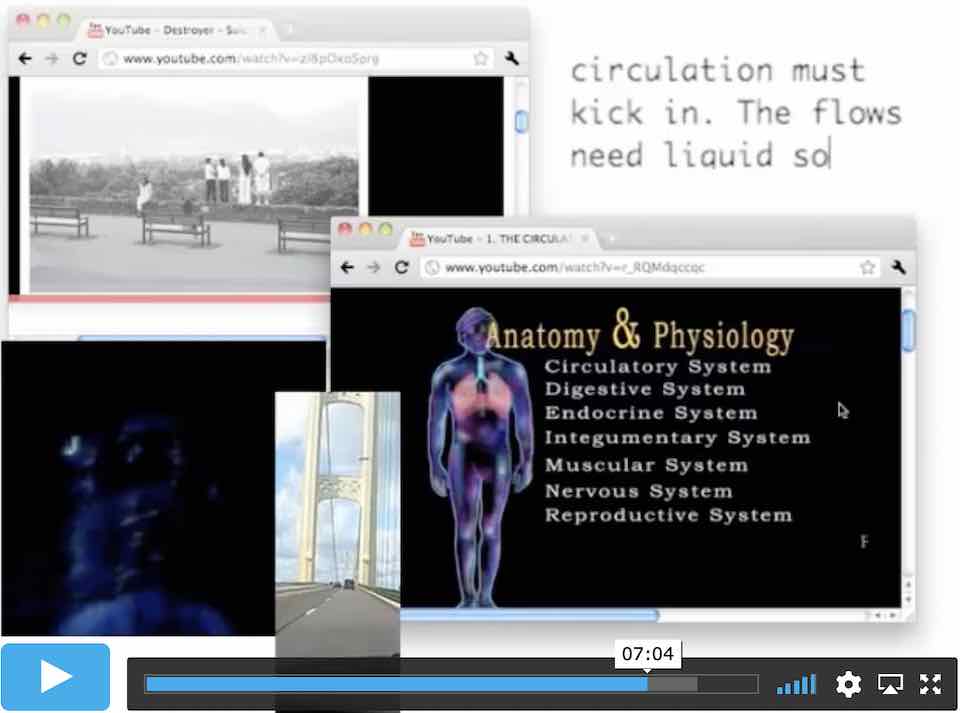
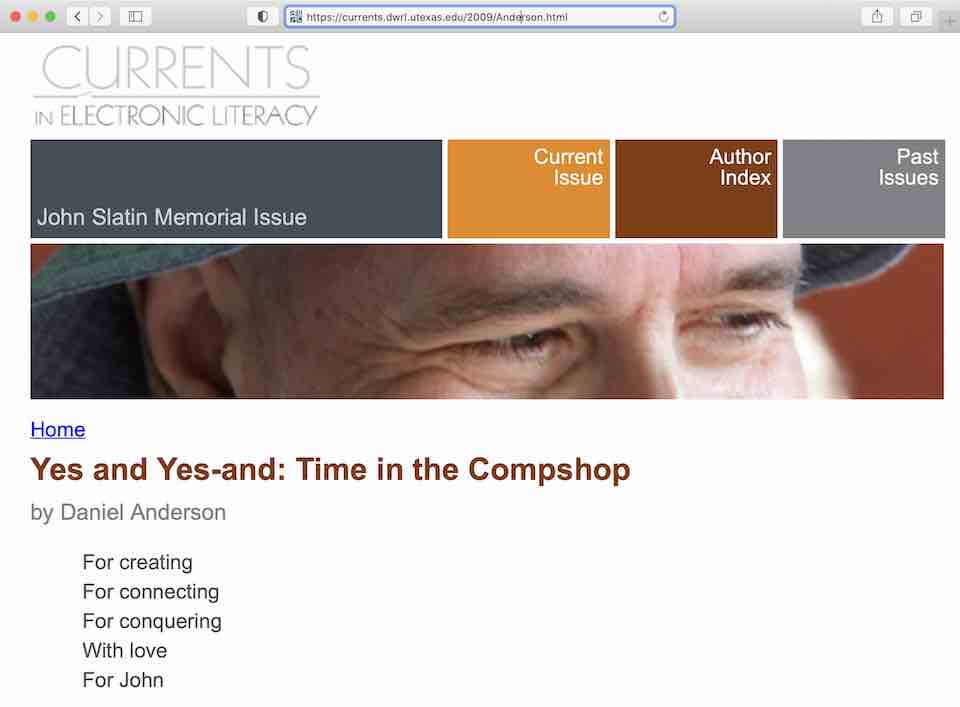
Screen shot of article

Yes and Yes-and: Time in the Compshop

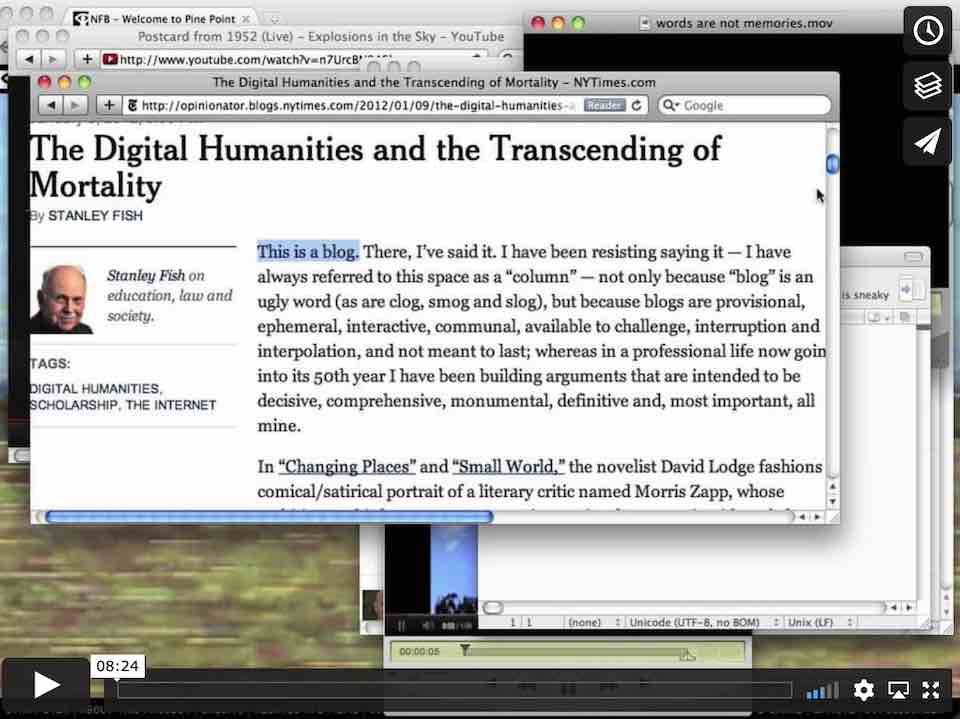
Scholarship in the humanities is far too combative. A typical move is to review what has been said by others, and then to lay out problems with their analysis, evidence, or conclusions--a refutational mode captured by the phrase yes, but.

But what if we take an approach borrowed from improvisation, the directive to accept and extend the ideas of others? This piece imagines some of those possibilities by composing with affirmation. Writing without ever using the phrase however is harder than it seems. And rewarding.

Explore the article

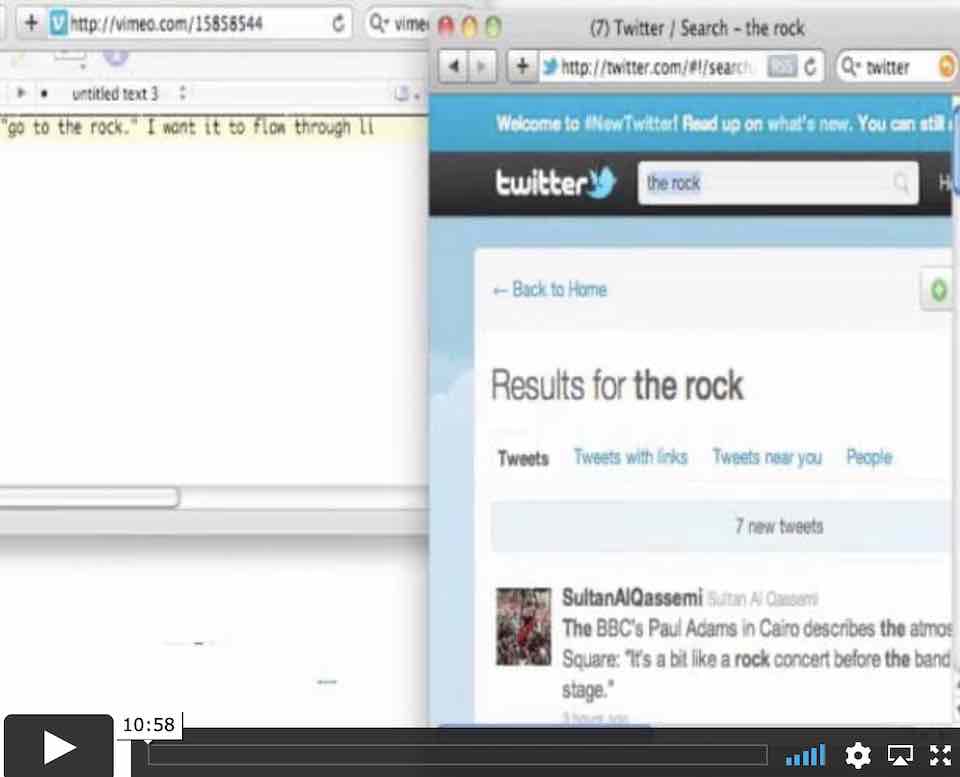
Watch Untitled Improv Typing on Vimeo

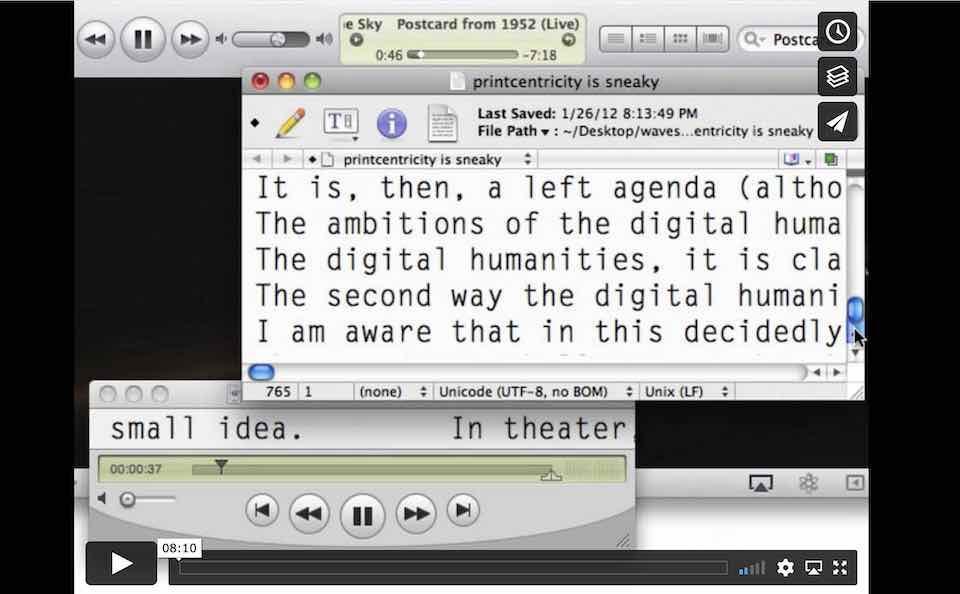
Untitled Improv Typing

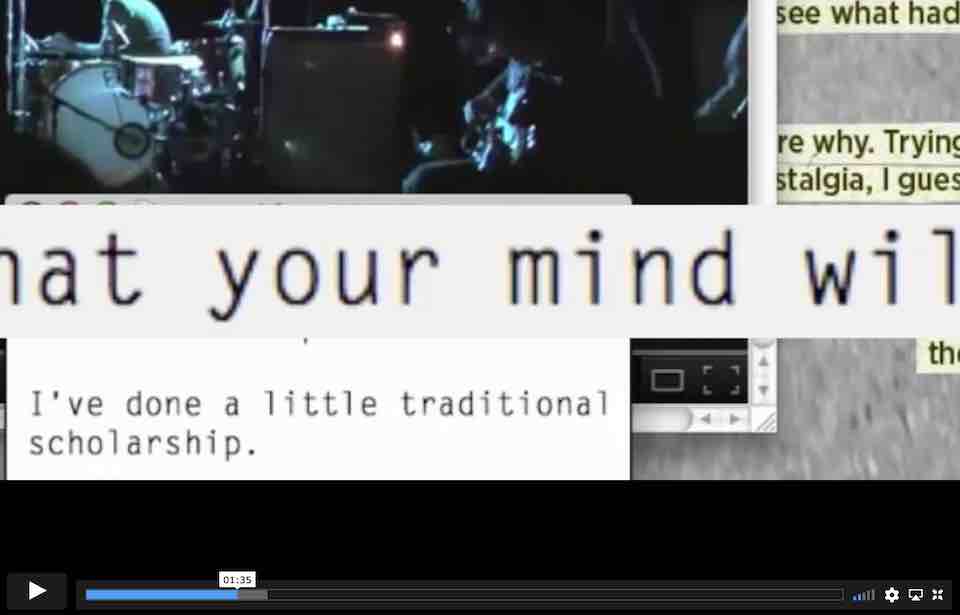
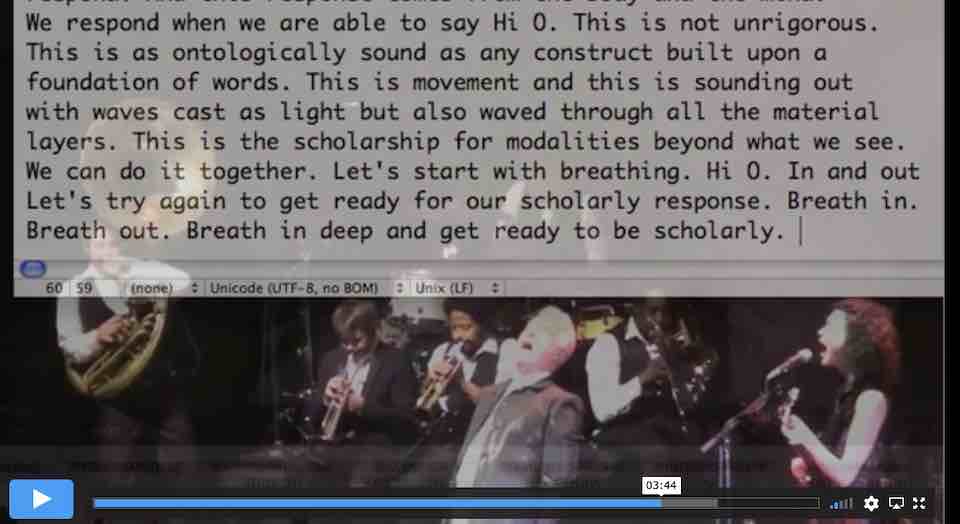
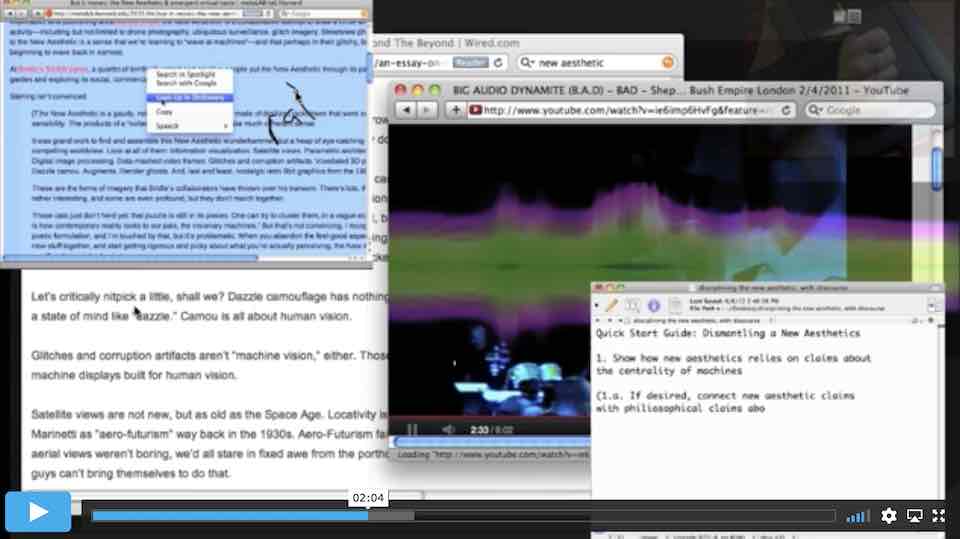
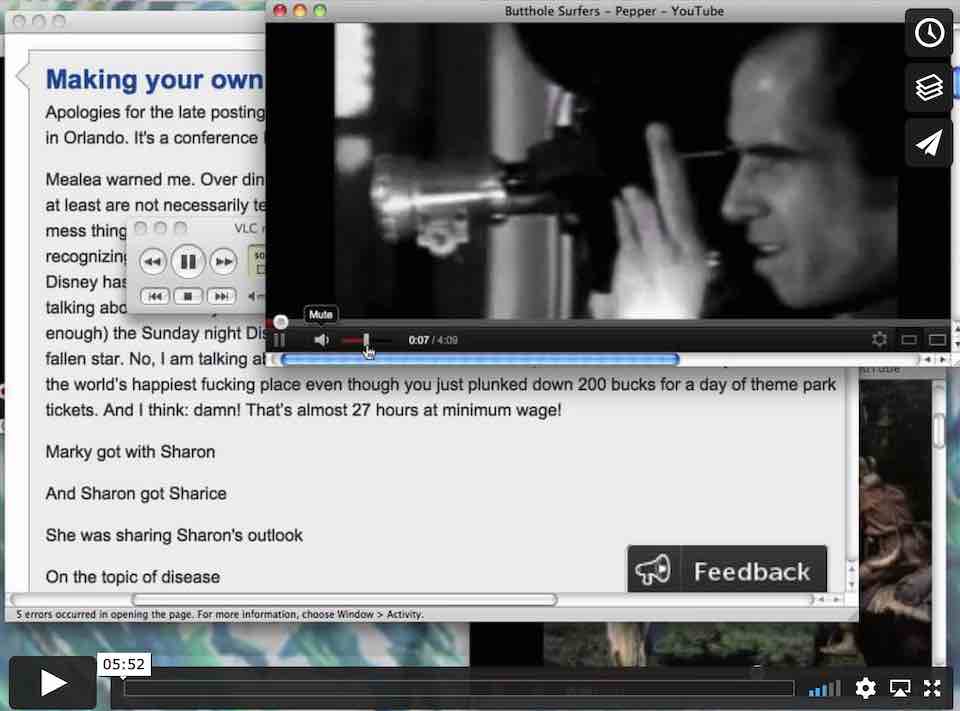
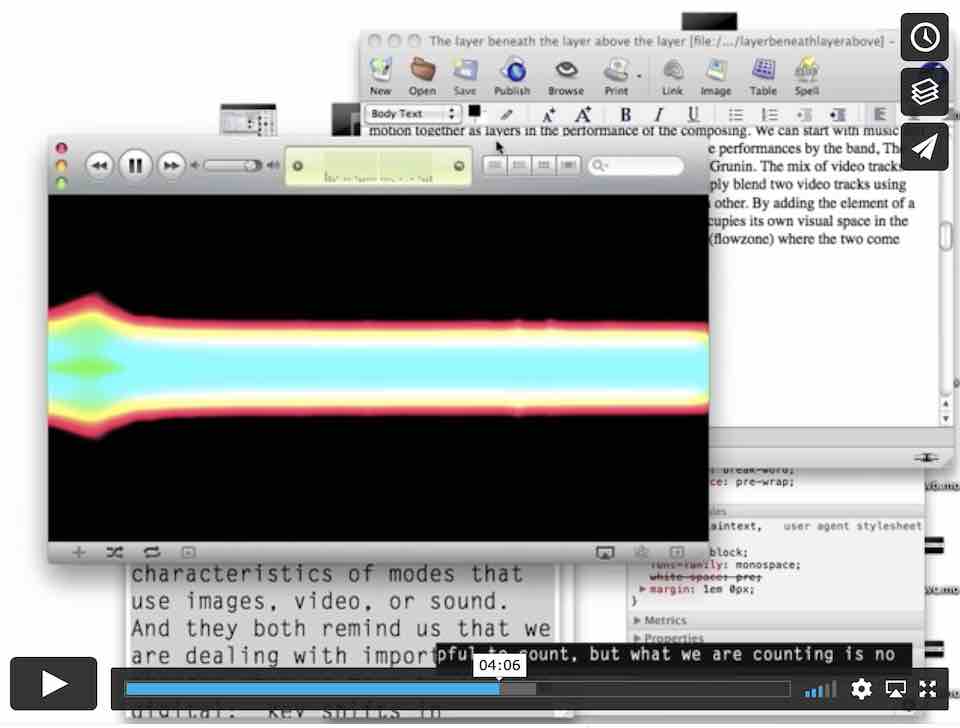
How does listening to music shape composing? What if the composition itself is shaped by the song? And what if we add performance? Screen composing knows that capturing live typing changes the words that emerge. Taking up ways of knowing in this space casts the ephemeral explorations as scholarly writing.

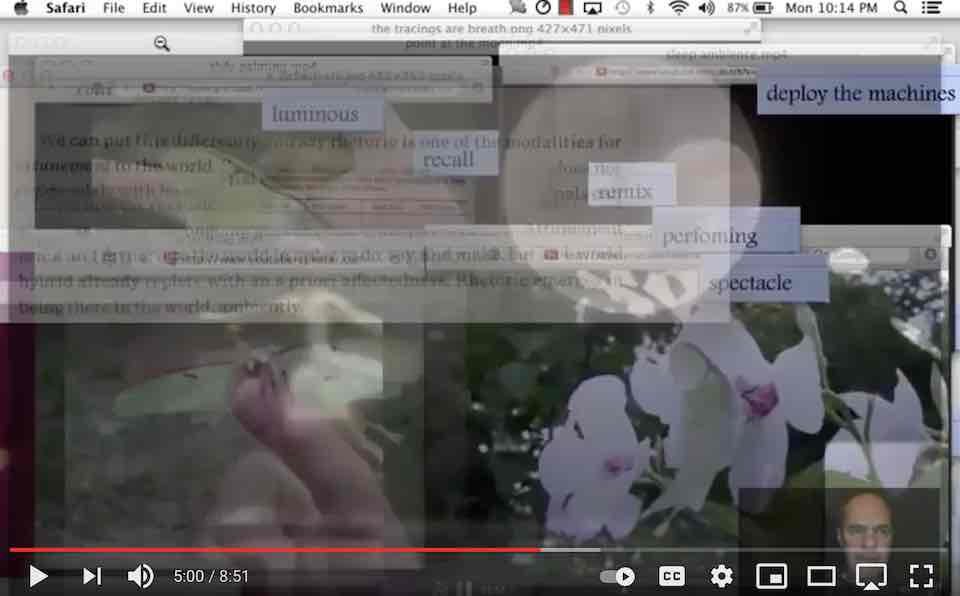
Remix

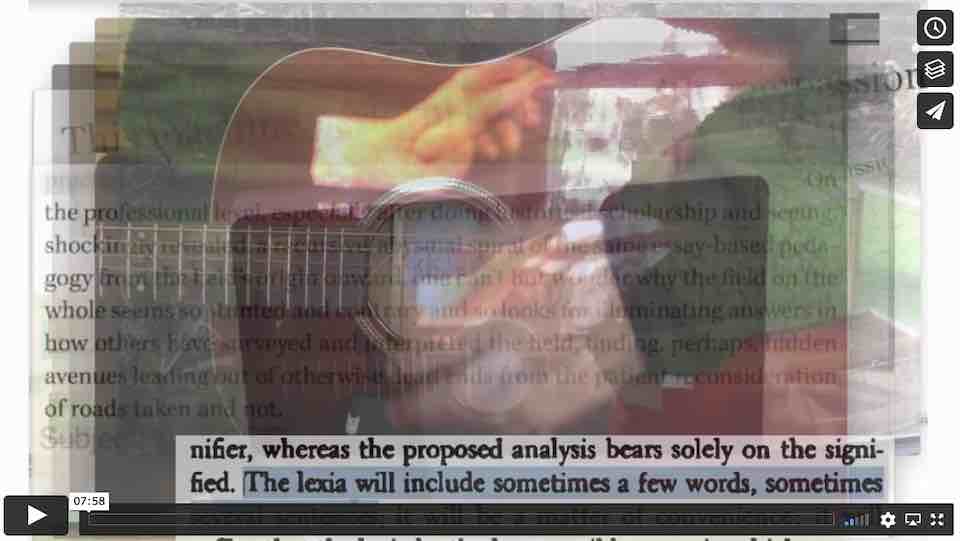
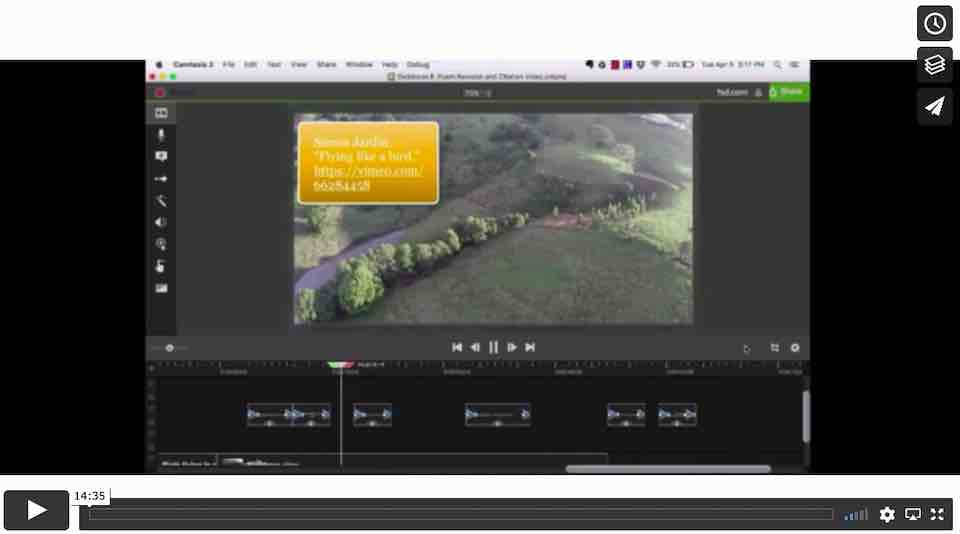
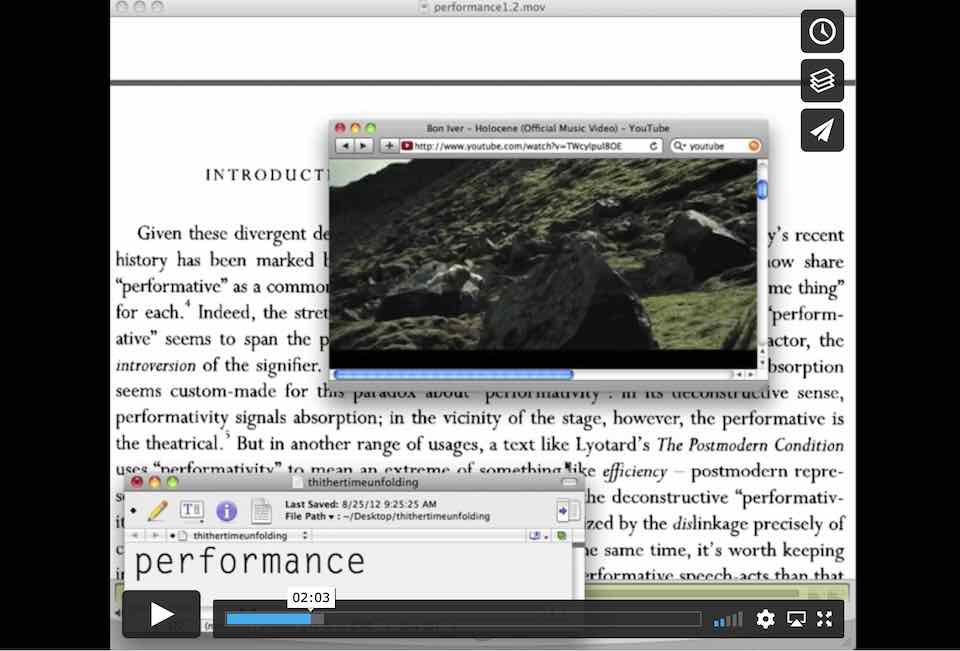
One way of developing alt-scholarship is through shifting modes. Moving projects from print to audio or prose to image interprets texts as the message and qualities are recast. It's a mode akin to translation. Remixing offers a productive, speculative way of engaging poetry.

Screen shot of the video
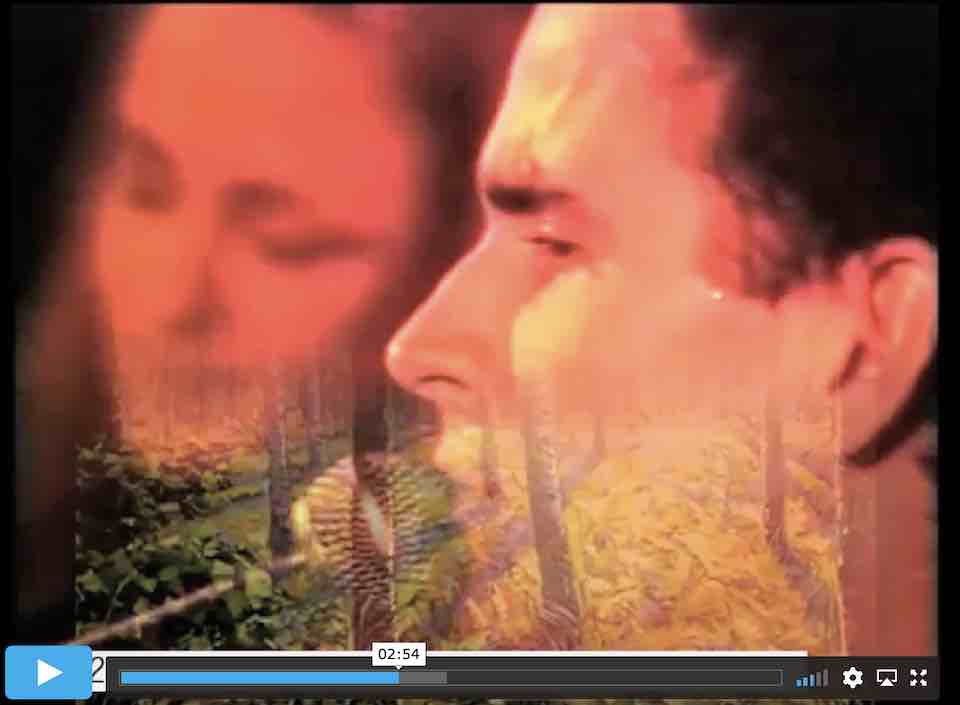
Moonmoth: watch the video while you read the lyric. In the video archive

Moonmoth

It's a moving thing
With a leaf for a wing
It's a moon moth

It's the silhouette
You make when you get
Near the sky

It's the ceaseless track
That keeps bringing you back
To the night

It's another year every year
And you never hear
Anyone cry

It's the place that you stand
With your hat in your hand
In the light

It’s a single tear
And it’s crystal clear
As it longs to escape from your eye

And you turn 17
And you turn 65
And you turn and you turn
And you try

It's another year every year
And you never hear
Anyone cry

It’s a scene from a dream
And it floats through your screen
It’s a moon moth

It’s the way you return
To the lesson you learn
In goodbye

It's the endless scrawl
When you’re crawling the wall
To get high

It's another year every year
And you never hear
Anyone cry
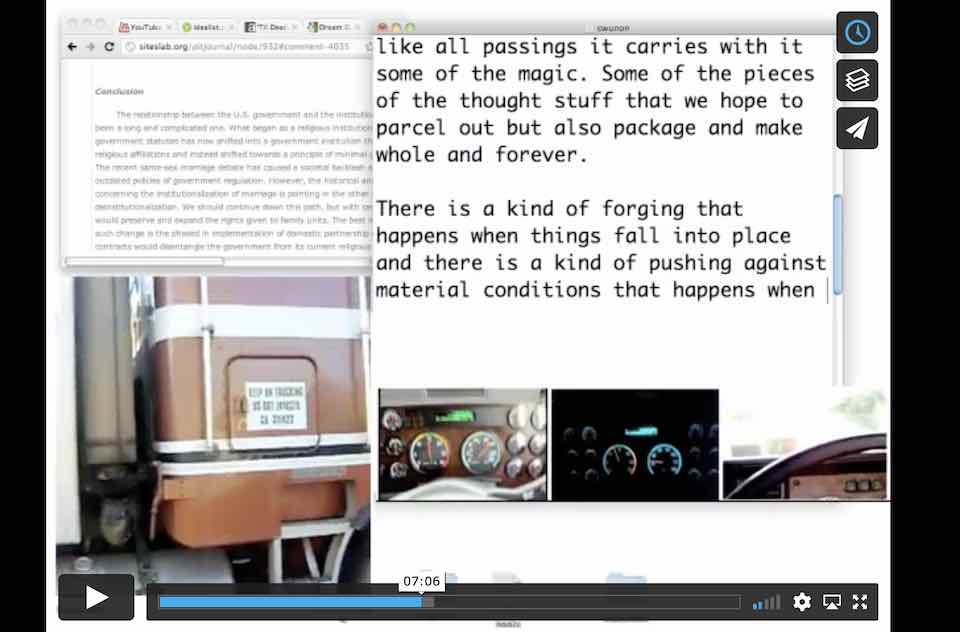
Watch Trainsplaining on Vimeo

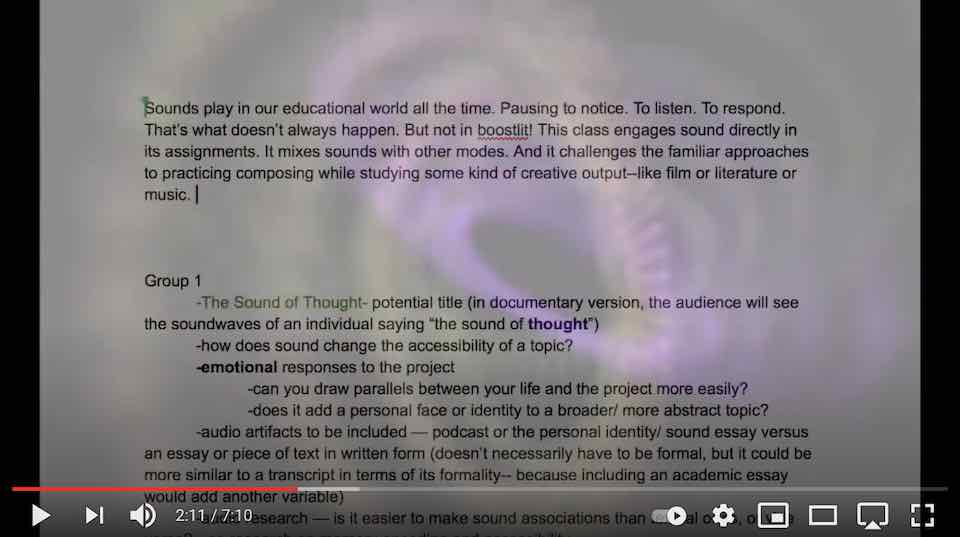
Affect & Embodiment

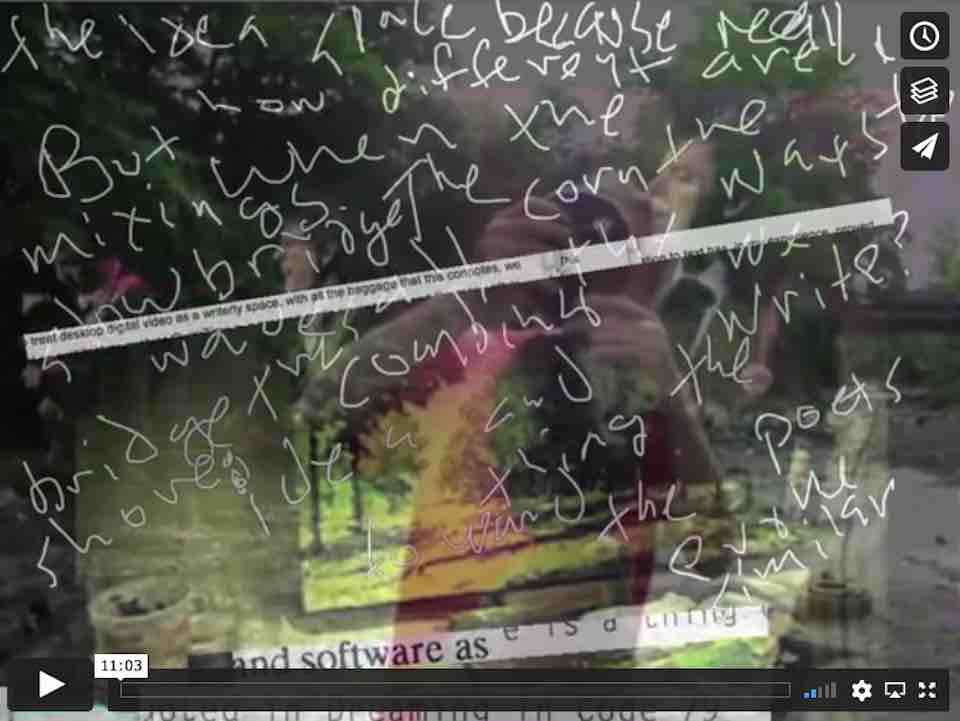
Rhetoric has long recognized that there are multiple modes of communication--from the status of a speaker to logic to emotions. What happens when we extend the primary, logical mode of argument with these other possibilities? A good deal of scholarship has been written about affect and emotions. Not much has been written through them.

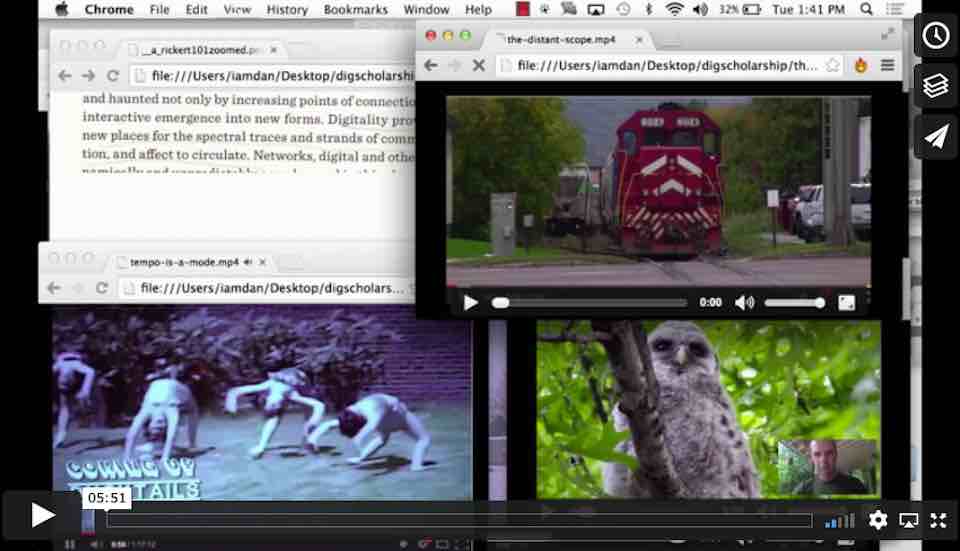
Trainsplaining

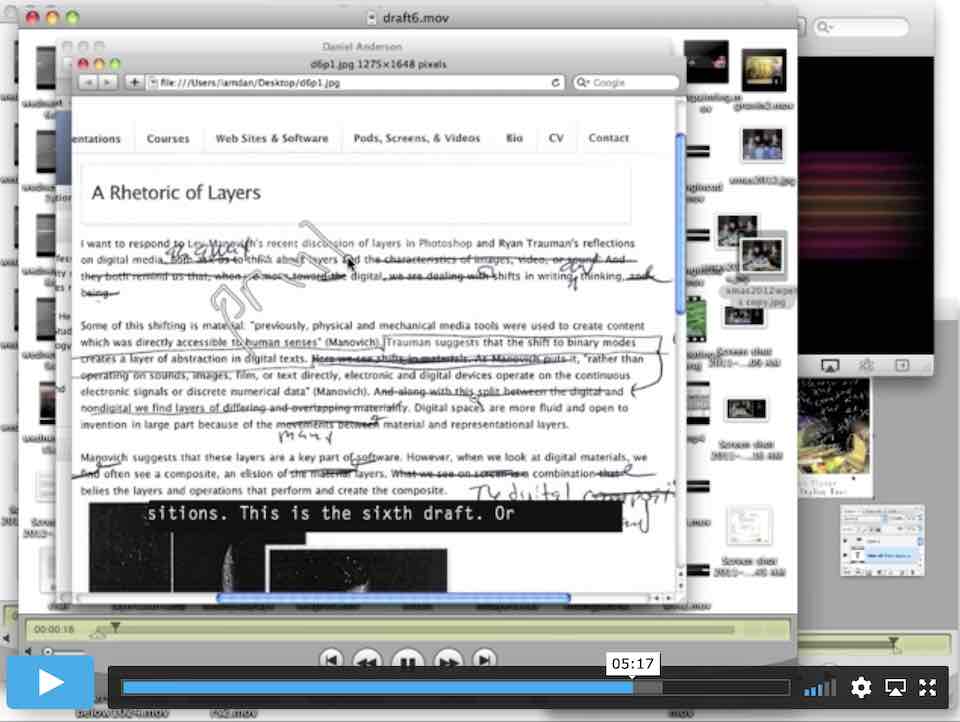
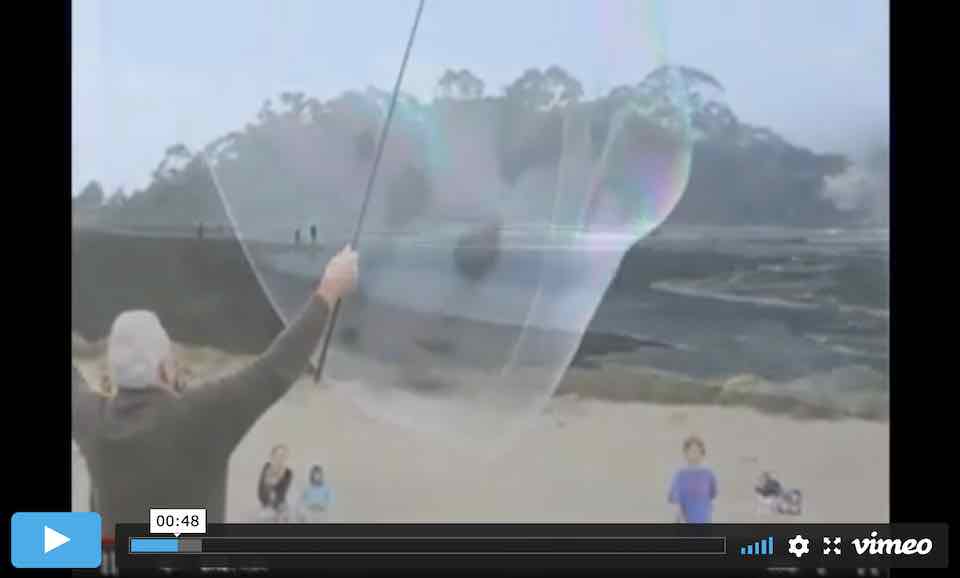
One possibility for opening avenues for new modes of scholarship is multimedia. Sound, for instance, has a material dimension that differs from text on a page. As we process waves of sound, meaning becomes embodied. This piece explores the role of affect on our understandings. Music, the sounds of owls, and trains passing persuade us that, as we move into emotional registers, the body and sensation become key elements of scholarship.

Learn more about Trainsplaining

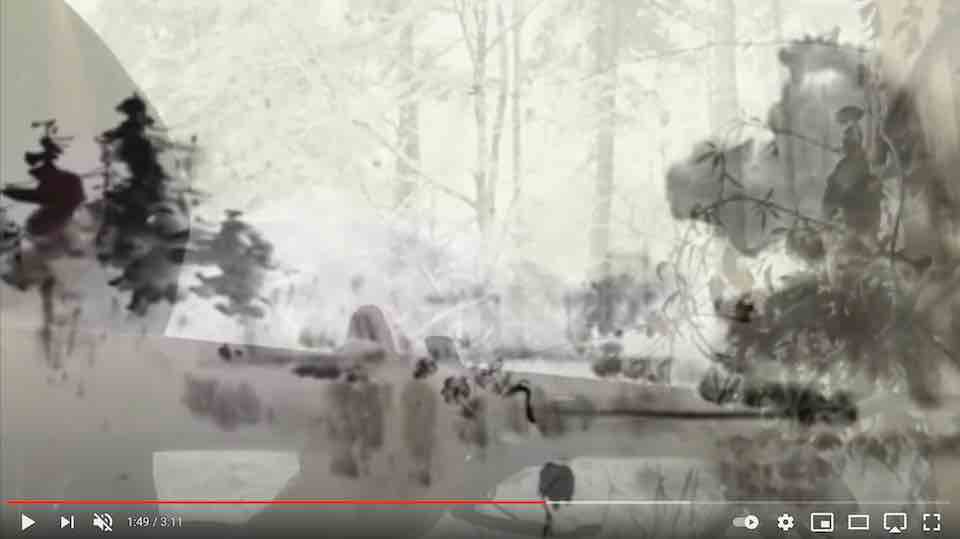
Speculation & Ambiguity

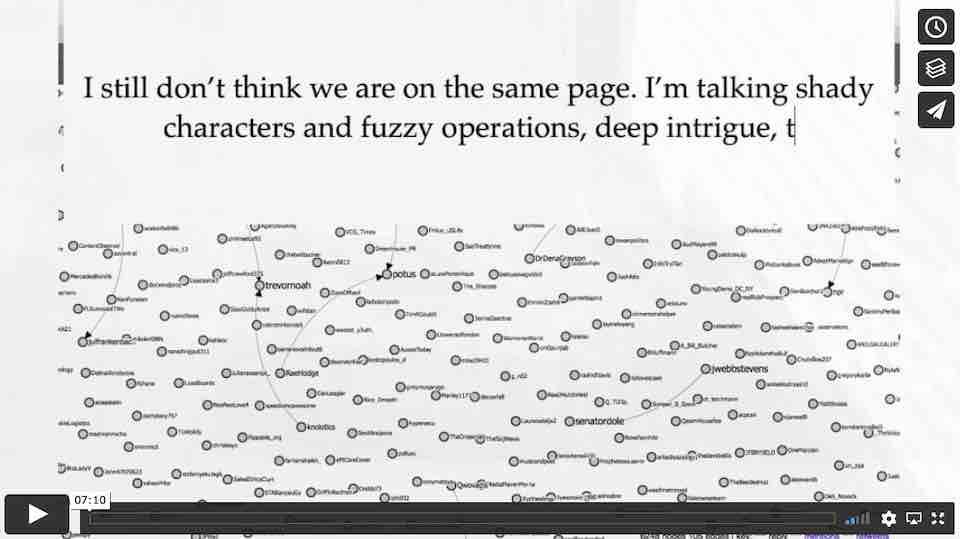
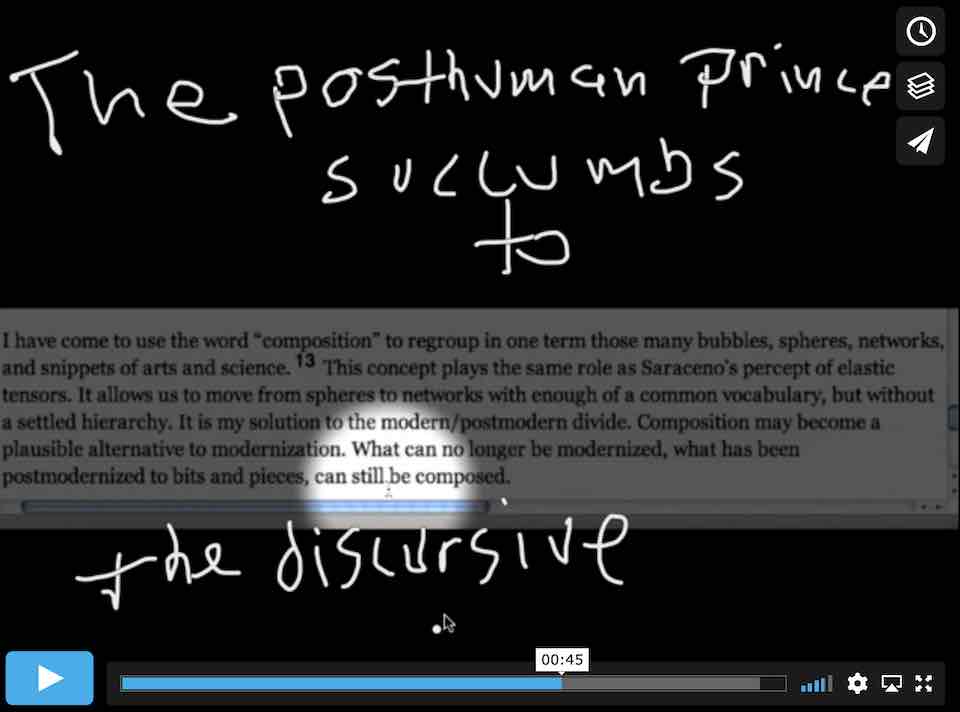
Contemporary theories of knowledge express concern over approaches that know in advance the outcome of their investigations. Ideas and the world take shape in ways that are networked, emergent, and ephemeral. How can we pursue scholarship that is similarly open ended? And what happens to notions of certainty that are typically yoked to academic investigations? Can the scholarship we produce participate in the same rich possibilities we associate with the creative texts we study? What happens when we compose with the aim of deploying ambiguity and moving from concrete to abstract claims?

Learn more about Blessing

Watch Blessing on YouTube

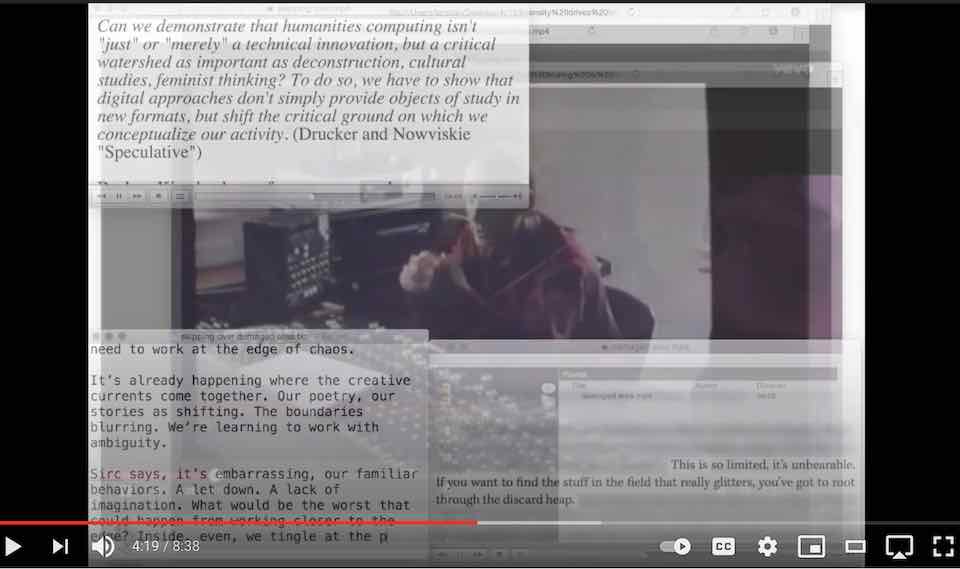
Alt-scholarship Videos

The red wheelbarrow

so much depends
upon

a red wheel
barrow

glazed with rain
water

beside the white
chickens

Learn more about So Much Depends

Watch So Much Depends on YouTube